
Materials Ready When Your Project Needs Them
Filament Sales in Missoula for projects requiring specific material properties, color consistency, or immediate availability
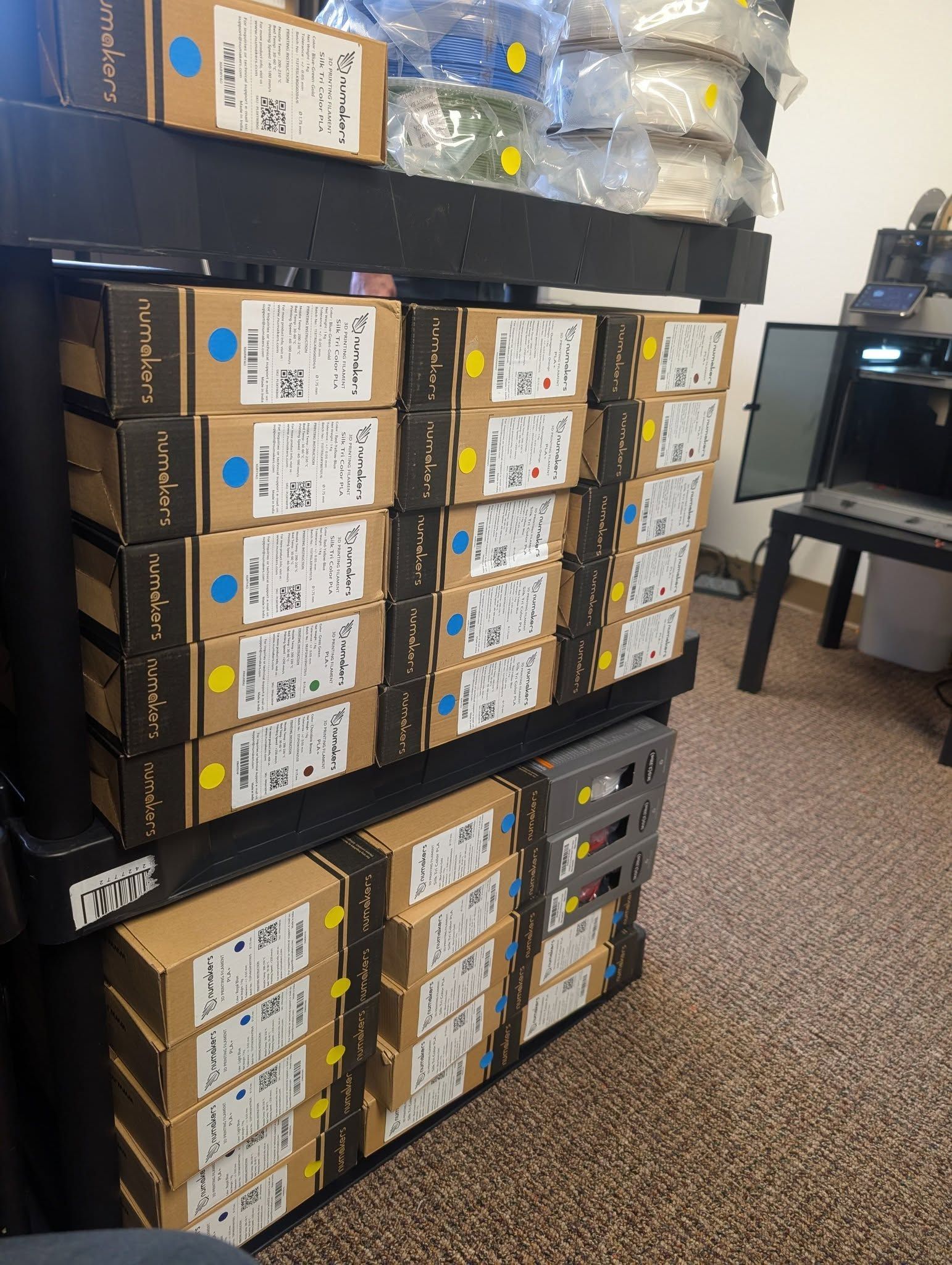
Local filament access in Missoula eliminates shipping delays and allows you to start printing the same day you select materials. Spectrum 3D Prints stocks filament types suited to artistic work, functional household repairs, prototyping, and custom fabrication that requires specific strength, flexibility, or temperature resistance. Purchasing directly from a business that operates printers daily means material recommendations come from direct experience with how different filaments behave under actual print conditions, not just manufacturer specifications.
Different filament types address different application needs—PLA for dimensional accuracy and ease of printing, PETG for parts that need impact resistance and moisture tolerance, TPU for flexible components like gaskets or grips, and specialty materials for functional parts exposed to heat or mechanical stress. Choosing the wrong material leads to prints that warp, delaminate, or fail structurally under use conditions. Material selection guidance considers your print goals, environmental exposure, and whether the part needs to flex, bear load, or maintain tight tolerances.
Visit the storefront to review available filament options and receive recommendations based on your specific printing application.
Filament choice directly affects print adhesion, layer bonding, dimensional stability, and post-print durability. Materials with higher glass transition temperatures require heated beds and controlled cooling to prevent warping, while flexible filaments demand slower print speeds and specific extruder configurations to avoid jams. Moisture-absorbed filament produces steam during extrusion, creating voids and surface defects that weaken layer bonds and roughen surface finish.
When you select appropriate filament for your project, you'll see prints that complete without warping or lifting from the bed, layers that fuse strongly enough to handle mechanical stress, colors that match across multiple spools, and parts that perform as expected when installed or put into use. Projects that previously failed due to material mismatch—brittle parts that crack under load, flexible prints that jam extruders, or heat-sensitive components that deform—succeed when matched to compatible filament types.
Filament compatibility extends to repair projects where replacement parts must match original material properties, custom printing where clients specify performance requirements, and functional household applications like mounting brackets, tool holders, or replacement components that need to withstand repeated use. Buying from a local source also allows you to inspect spool condition, confirm color accuracy in person, and avoid receiving damaged or moisture-compromised material from prolonged storage or shipping exposure.
Questions About Filament Selection and Use
Material questions typically focus on which filament type suits specific applications and how to avoid common printing problems tied to material properties.
What filament type works best for outdoor use?
PETG offers better UV resistance and moisture tolerance than PLA, making it more suitable for parts exposed to weather, though long-term outdoor durability still depends on pigment stability and whether the part experiences direct sunlight or freeze-thaw cycles.
How does filament moisture affect print quality in Missoula?
Moisture absorption causes popping sounds during extrusion, visible bubbles or pits on print surfaces, and weakened layer adhesion as steam escapes during the melting process—problems more common with hygroscopic materials like nylon or PVA, though even PLA and PETG degrade with prolonged exposure to humidity.
Can I use the same print settings for different filament brands?
Temperature requirements, flow rates, and retraction distances vary between brands even for the same material type due to differences in filament diameter consistency, additives, and polymer formulation, so test prints and slicer profile adjustments are usually necessary when switching suppliers.
What's the difference between economy and premium filament?
Premium filament typically offers tighter diameter tolerances, more consistent color saturation, fewer contaminants that cause clogs, and better moisture resistance during storage, which translates to more predictable extrusion behavior and reduced print failures compared to economy options.
Do you stock filament colors beyond basic options?
Inventory includes both standard colors for functional printing and specialty shades for projects where appearance matters, with availability varying based on current stock and the ability to order specific colors when projects require exact color matching.
Spectrum 3D Prints provides filament selection assistance for hobbyists, creators, and businesses working on custom printing projects in Missoula. Stop by to discuss material options that match your print requirements and application needs.